
Say cheese, say Halloumi
Halloumi is indigenous to Cyprus and is one of a few cheeses made in Cyprus, so as a Cypriot and a food blogger this is something I wanted to try and make myself.
Halloumi has been made in Cyprus for hundreds, not to say thousands of years and the recipe was given from mother to daughter as traditionally this was a woman’s job to do. The man of the family usually looked after the flock and the milk they brought home was the woman’s job to turn into halloumi. Anari (which is a soft white cheese, in Greece it is called anthotyro or myzithra) is made during the process of making halloumi. Anari is similar to Greek anthotyro or myzithra as it is called in Crete, or and to Italian ricotta but much more tastier. The only one I can compare to be as tasty as "anari" is the Cretan one. Other type of Cypriot cheese is kaskavalli, a yellow cheese, similar to graviera and is characterized by its holes and the horiatiko tyri (village cheese) which is the one we use to make the Easter flaounes. Finally, they also made yoghurt.
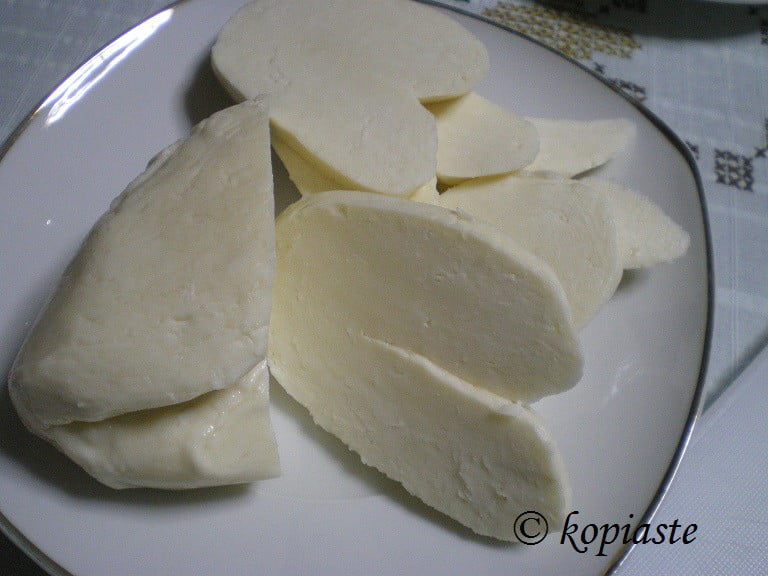
A lot of people compare halloumi to be similar to mozzarella. The method mozzarella and ricotta are made are similar to halloumi and anari except for the type of milk used. Maybe the presence of the Venetians in Cyprus may have had something to do with the introduction of the method of making this cheese, to Italy, but this is just a thought of mine, which should be explored further by the experts! There is however written evidence that the doge of Venice, Leonardo Dona, who was in Cyprus, during the Venetian occupation of the island, mentions “calumi”, in one of his manuscripts and it is about that time when mozzarella starts appearing in Italy.
I was planning to try and make halloumi which is the traditional cheese of Cyprus but my only problem was where to get some ewe's and goat milk in Athens. When Val asked me to co-operate and write a post about halloumi, I decided to attempt and make some, because I always wanted to make halloumi for a long time but I was rather afraid that it would be very difficult to make. Once, I made up my mind up to make some, I started looking for milk and rennet. I finally found organic goat milk in a shop selling organic products but it was quite expensive so I just bought a small quantity and after asking here and there I was finally told to look for rennet at a pharmacy and that was where I got some. Cow's milk can also be added but to get a taste what real halloumi tastes like, it's better to use either sheeps' or goat milk. Using cow's milk, they won't taste the same.
My eldest sister, Zoe when her family faced some financial problems, they sold their house in Limassol and moved to my brother-in-laws' village. There she learned how to make halloumia (plural of halloumi) not as a profession but for her family. Zoe was in the culinary industry and had a taverna, together with her husband, called "Zakaki Corner", the village, where they moved to. When my brother-in-law died, at the age of 54 my sister was only 52. Now, one of her sons has two restaurants on the beach of Ladies’ Mile, five minutes from the New Port of Limassol and one in the old town, near the castle called "To Hani". My sister still manages one the the restaurants.
When my sister was visiting me, a couple of weeks ago, we talked about many things. She talked to me about our grandparents, whom I did not meet as they all died before I was born and she also told me a lot of things which I did not know, about my family and especially my mother. For instance, when my sister was a teenager my mother bought cloth to make a coat and my sister wouldn’t let her sew it for herself as she thought that she was too old for it and it would be better for her to have it. My mother came from a village named Kyvides. Her village was totally destroyed, by a major earthquake, maybe thirty years ago, I do not remember exactly when and the village was rebuilt again in another safer location, not far away. When my sister visited that village she tried to find out if we had any relatives there. She remembered the name of a distant relative and managed to locate him. When she said whose daughter she was that man remembered my mother by a nickname they gave her when she was young. Anyway this man referred to my mother as "the blind kid”. Of course my mother was never blind, neither did we know that she had any problem with her sight but she did have a little scar over her eyelid, at least my sister remembered that. Evidently, when she was looking after the sheep, she fell and a thorn pierced her above the eye. The damage was not much but when she went to school the kids gave her that nickname. My grandfather died when she was 11 and my grandmother with her other two daughters moved to Limassol, where her older daughter was married and lived there.
Back to halloumi now. Among other things we talked with my sister was food. I asked her a lot of questions about many things I wanted to find out. One of the things she told me was the recipe of making halloumi. I can remember when she used to make them. We would eat some hot just as they were prepared. I will never forget that wonderful taste in my whole life!! I find it difficult to describe that taste of halloumi. It had a very appealing flavour that’s unlike any other cheese: mellow, but not the least boring, mildly sheepy, notably tangy, salty, never too strong with a bite of mint bursting in your mouth.
I have a lot of notes of things we discussed and Cypriot recipes I have never made before, as well as stories she told me about our family and shall be writing about them in the near future.
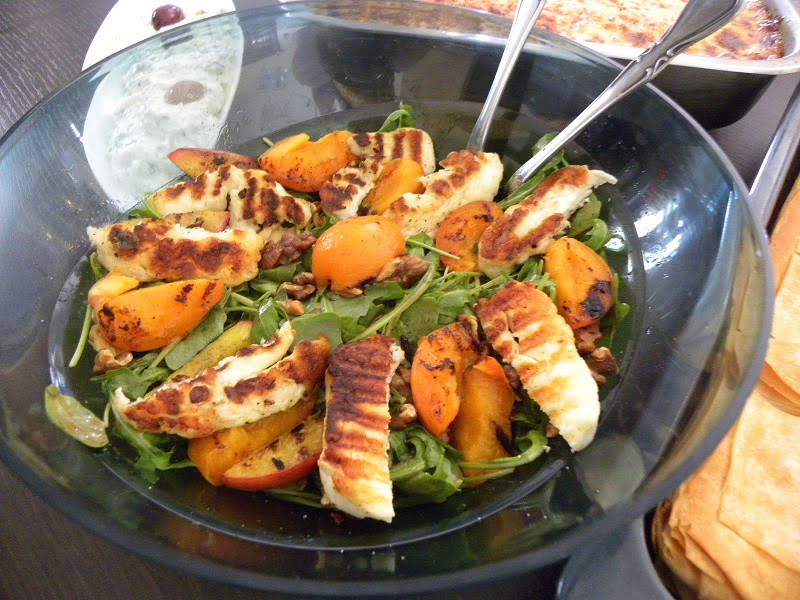
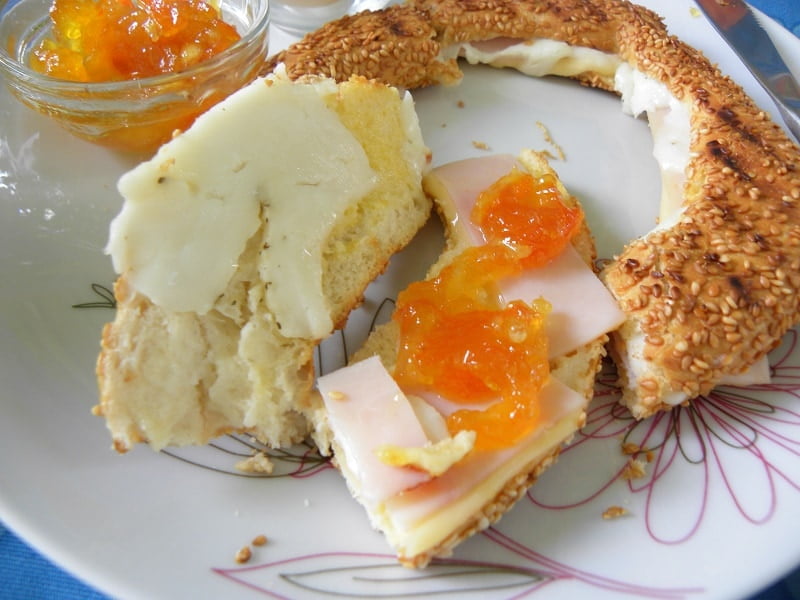
Halloumi is so versatile and can be enjoyed almost in any of the ways you’d eat all other cheeses: sliced up as is for a simple snack, in a pita as a sandwich, grilled, fried, barbecued, boiled in soups, cubed into salads , melted on top of casserole dishes, grated on top of pasta dishes, even as a dessert with watermelon or together with marinated dried fruit.
I am submitting this post over at Marla at Bella Baita View who is hosting this month’s Apples and Thyme event, created by Jeni of Passionate Palate and Inge of Vanielje Kitchen. If you would like to read stories where other bloggers remember people who have influenced their lives in the kitchen please visit their blogs and there are a lot of stories to read and lovely recipes to enjoy.
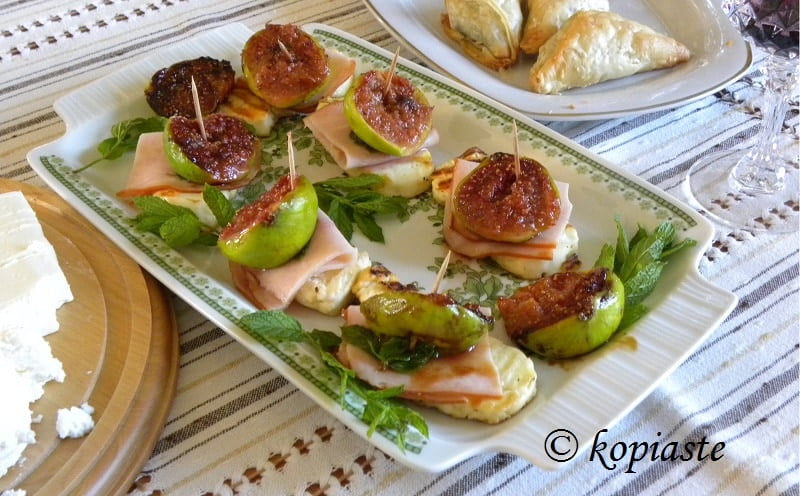
How to make Cypriot Halloumi Cheese
Preparation time: from beginning to end about 3 hours and a lot of mess in the kitchen.
Ingredients:
- 10 litres fresh milk, either goats or ewes (I used about 4 kilos goats’ milk and made 1 big halloumi)
- 2 grams rennet or special cheese rennet
- 6 teaspoons of salt
- Fresh or dried mint (unfortunately I did not have any)
You will need a very big Pan and some muslin or cheesecloth
Directions:
Dissolve rennet in ¼ cup of water.
Reserve ½ cup of milk and put the rest on the heat. When it is lukewarm (around 35 degrees C), add rennet, which dissolve in ½ cup of water. Stir a few times and remove from heat.
Cover pan with a clean towel until the milk has curdled. This will take about 45 minutes. When the curd forms (this is called "trohalla" in the Cypriot dialect), collect it and put it in a colander to cool until you can handle it and then shape the curd into a ball with your palms and press it so that the remaining whey is removed.
Halloumi is formed into a flat disc and then fold. A couple of fresh mint leaves are added inside before folding.
Meanwhile add the ½ cup of milk and 3 cups of water to the whey and bring to the boil stirring constantly. Reduce heat and keep simmering. Any curds which form on the top will become anari. Collect the curds which again should be placed in a cheesecloth to drain the whey.
In the villages they used to put them in straw or reed baskets where they were left to drain but if we do not have any we can put them in cheesecloth (or muslin) and let them drain for about half an hour after which they will become firmer.
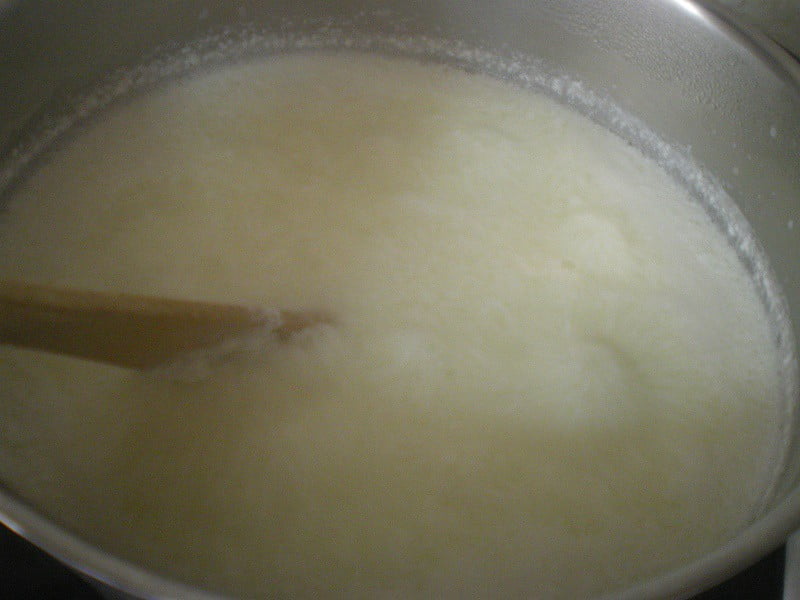
After the curds have been collected, put the pot with the whey on the heat and bring to boil. Add the firm halloumi back in the pot and simmer gently until the cheese floats to the top. Once they float continue cooking for about 15 minutes. Remove cheese, with a slotted ladle in a bowl of cold water until you can handle and shape them. Flatten them into a round disk and sprinkle with salt on both sides. Place some mint in the middle and fold in the middle.
Place them in a big glass jar while they are still hot.Let them cool down completely and fill in the jar with brine which make with the remaining whey (in which mix a teaspoon of salt per 1 cup of whey).The brine must cover them in order to be preserved.Once taken out of the whey it may be kept in the refrigerator for several days.In case whey is not enough, wrap each one in foil and store in the deep freezer.
After draining anari to remove whey, you may either eat it fresh as it is with sugar and cinnamon or with honey. Anari is used in phyllo pastry desserts and in a lot of other recipes.
To preserve anari, you can add salt all over it and put it again in muslin and hang it and leave it to dry for a week or more to form a hard cheese similar to parmesan, suitable for grating on top of pasta etc.
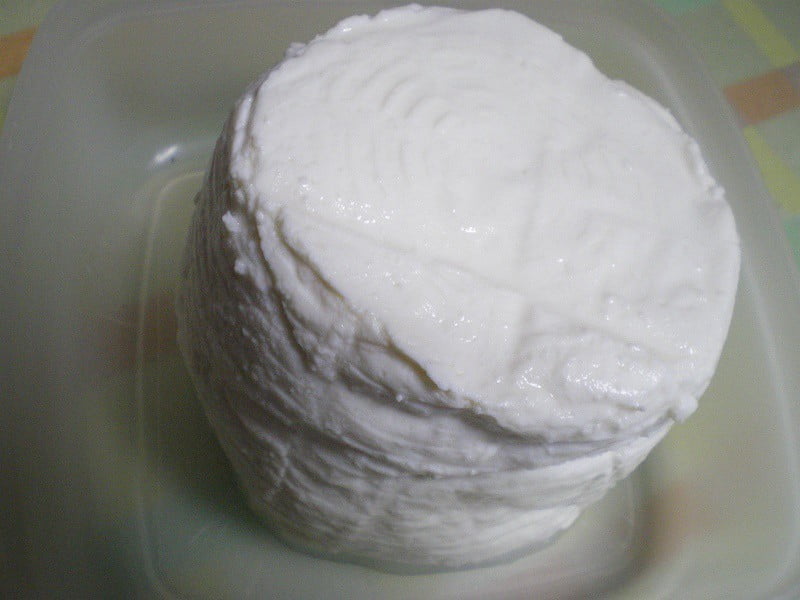
"Anari"
I made only 1 big halloumi and a small amount of anari. Although I used only goat's milk, they tasted just like real halloumi. There wasn’t much I could do with this halloumi but I wanted something special, so I prepared a traditional Cypriot breakfast.
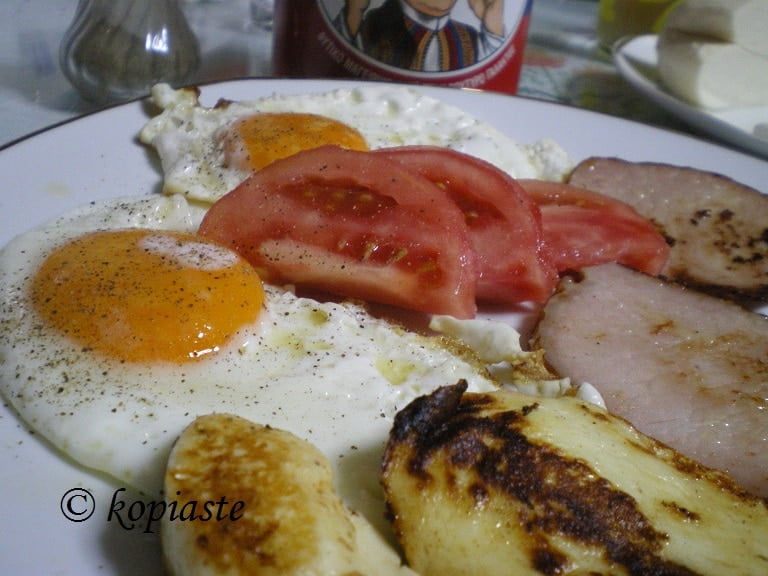
Traditional Cypriot breakfast with Halloumi and Lountza.
Lountza is Cypriot cured smoked pork tenderloin. After the initial brining and marinating in red or white wine, it is wrapped in coriander seeds and smoked.
My mother used to prepare our breakfast with spry shortening. In Cyprus we did not use olive oil for cooking as the Cypriot olive oil is not so refined as the Greek one. We usually used peanut oil for cooking, olive oil for salads and Spry was used for cakes, frying, roasting etc.
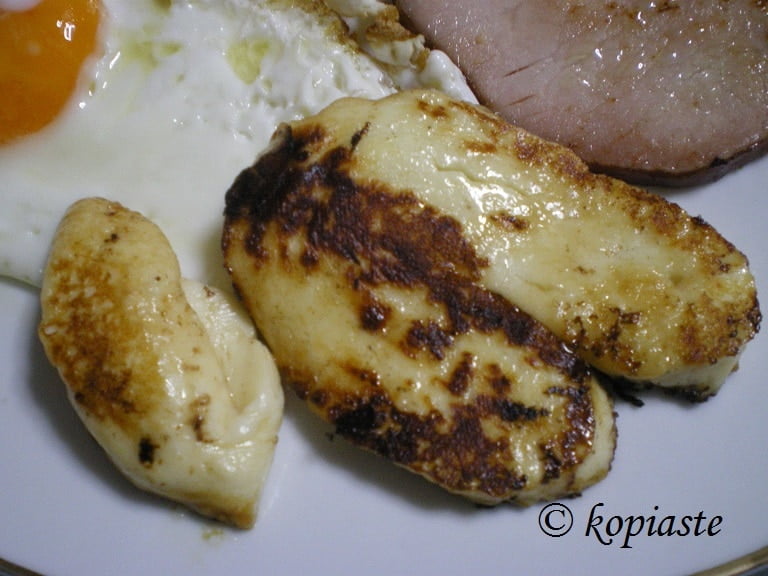
So to prepare our breakfast I put a tablespoon of spry and a tablespoon of olive oil and when it was hot, I fried the eggs first, to which I sprinkled some salt on top and later some freshly ground black pepper. Then I fried lountza and finally halloumi and served it with tomato and bread (unfortunately I did not make pita breads).
My family enjoyed this breakfast and although lountza and halloumi is something we only enjoy a few times a year, either when we visit Cyprus and bring back some with us or when some relatives visit us, this is something they know we love and always bring us some, as a gift.
Other relevant recipes:
How to make Paneer (Indian cheese)
Halloumi with Marinated dried fruit and nuts
Cypriot Tyropita (A Savory cake with halloumi)
Ravioles or raviolia (pasta stuffed with halloumi)
Flaounes (traditional cheese filled pastry, for Easter)
Halloumi in Pita Bread
Macaronia tou fournou (Pastitsio)
Anarotourta (biscuit based dessert with anari)
Bourekia with anari (anari with cinnamon and sugar wrapped in phyllo and fried)
Trahanas with Halloumi
Kopiaste and Kali Orexi!



Wonderful!
I keep a few sheep and have been looking for traditional cheeses to make with their milk next season. Plus this will make a wonderful gift for my friend (she lives in the states, but her grandparents and cousins are still in Cyprus). Thank you again! Now, can you tell me what the type of cheese is I heard about made by shepherds from Crete that curs in a sheep-skin bag? It seemed to be a quick-cheese as well...
Sorry I cannot help you as there are a lot of Cretan cheeses, some of which I am not familiar with the method they are made.
Maybe you can find the information you are looking for here.
http://www.greek-islands.us/crete/crete-cheese/
Far better post than mine :-))). Excellent work! I think we have to make some halloumia together and try to teach my mother how to do them as well :-)!
Thank you for sharing the cheese recipe! I was estatic to successfully make Greek yogart & ricotta cheeses not to long ago. Ill be making this one next!