
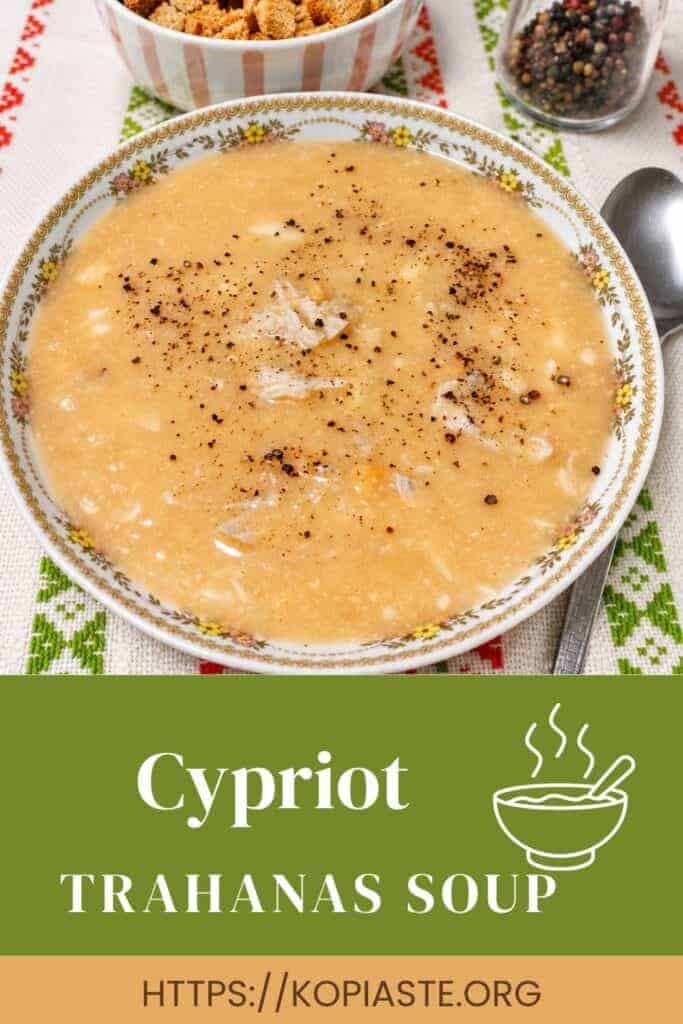
Cypriot Trahanas Soup
Trahanas (pronounced trah-hah-NAHS), is fermented ewes or goat milk and cracked wheat flour, which is formed into oval patties and dried. It is used to make a comforting soup with the same name.
It is known throughout Greece and Cyprus, especially in the regions where they breed livestock.
Throughout both countries, we will find different types of trahanas, which we will further explore.
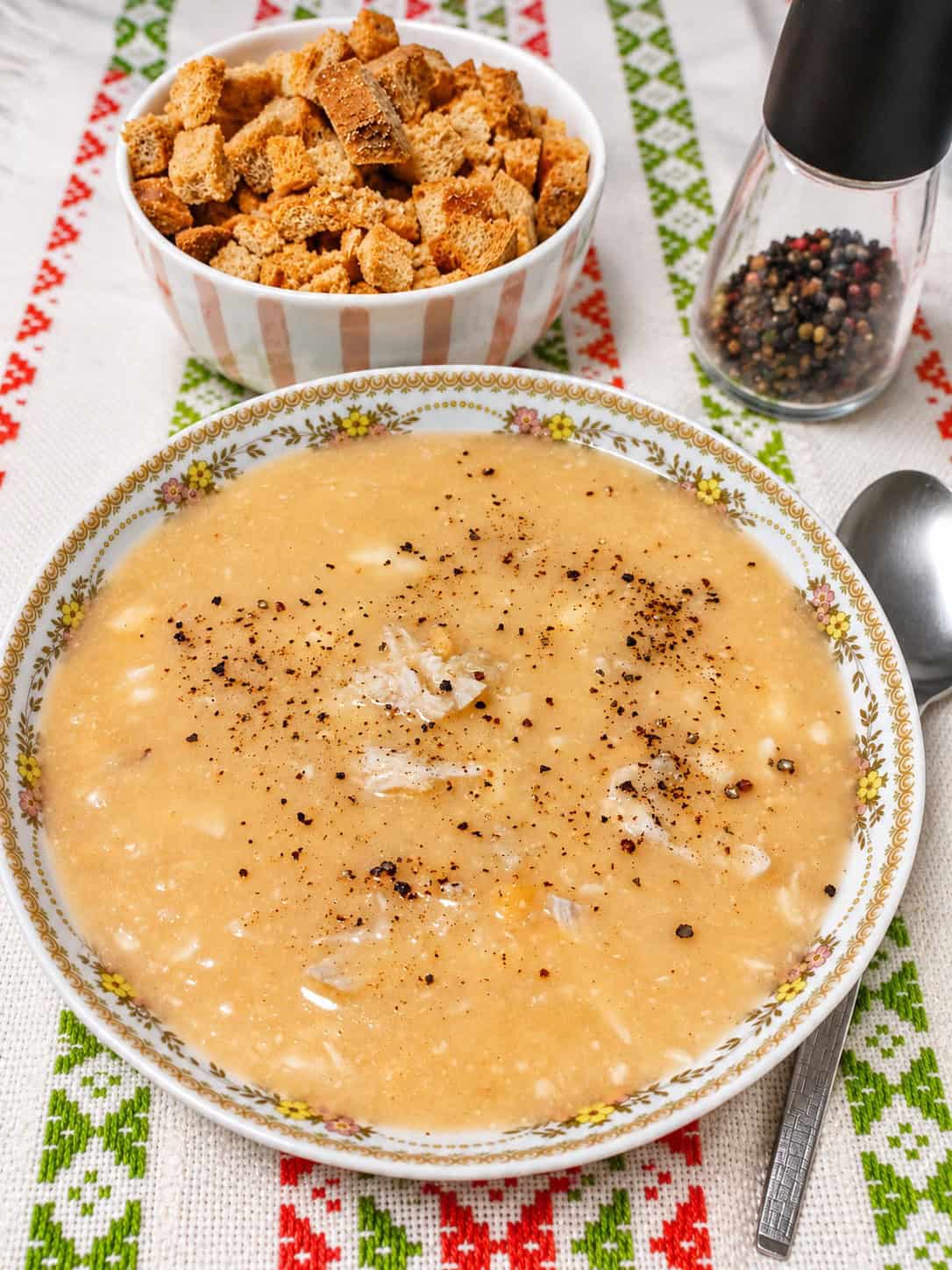
There is nothing quite like a steaming bowl of Cypriot trahanas soup on a cold winter's day. With its slightly sour flavour, creamy texture and delicious pieces of halloumi cheese, trahanosoupa is one of the most traditional and comforting soups of Cyprus.
Growing up in Cyprus, trahanas was a familiar part of our food traditions. I remember how much we loved eating it fresh, before it was dried and stored for the winter. Even today, its distinctive taste brings back memories of the traditional foods we enjoyed as children.

Trahanas is also much more than a simple soup ingredient. Its history stretches back through centuries of Mediterranean food culture, and its traditional preparation reflects the ingenuity, cooperation and culinary knowledge of generations of Cypriot families.
In this post, I will share how trahanas was traditionally prepared in Cyprus, explore its fascinating history and show you how to make a delicious bowl of homemade Cypriot trahanas soup.
What Is Cypriot Trahanas?
Cypriot trahanas is traditionally made from coarsely cracked wheat and fermented sheep's or goat's milk. The fermentation gives it its characteristic tangy, slightly sour flavour.
Unlike many varieties of Greek trahanas, which are dried in small granules, Cypriot trahanas is usually formed into larger, elongated or oval pieces and dried in the sun.
These hard, dried pieces can be stored for several months and used to prepare trahanosoupa, a thick, creamy soup traditionally enjoyed during the colder months.
The soup can be made simply with water, but chicken stock gives it a richer flavour. Pieces of halloumi cheese are often added, making it even more delicious.
The History and Origins of Cypriot Trahanas
The history of trahanas is closely connected with the agricultural traditions of Cyprus and the wider eastern Mediterranean.
Food historian William Woys Weaver explored its origins in his fascinating study, The Origins of Trachanás: Evidence from Cyprus and Ancient Texts, published in the journal Gastronomica in 2002.
Drawing on historical documents, ancient Greek texts, linguistic research and interviews with Cypriot villagers, Weaver examined how this humble preparation of cracked grain and fermented milk became such an important part of Cypriot culinary identity.
Trahanas and Traditional Cypriot Village Life
According to Weaver, the preparation of trahanas was traditionally an annual event, usually taking place in September or October.
Families prepared large quantities to preserve for the winter, when fresh food was not always readily available.
The work was primarily undertaken by women, who often gathered in groups to help one another. Making trahanas required considerable time and effort, from fermenting the milk and cooking the wheat to shaping and drying the finished product.
Weaver recorded traditional practices from several Cypriot villages, including Pano Arodes, Pachyammos and Pano Pyrgos.
In one account from Pano Arodes, goat's milk was collected gradually over sixteen days and allowed to ferment naturally in a large earthenware vessel called a stamna.
The vessel was kept in a cool cellar, sometimes partly buried in the ground. Wild thyme was placed over its opening to help keep insects away and to give the milk a delicate herbal aroma.
Once the milk had soured, it was heated in a large copper cauldron. Coarsely cracked wheat was gradually added, and the mixture was stirred continuously until it became extremely thick.
This process could take two or three hours.
After cooling, the thick mixture was shaped into individual pieces and spread on reed mats to dry in the sun.
The dried trahanas was then stored for the winter, sometimes in cotton bags with dried bay leaves.
Making trahanas was not simply a household chore. It was also a social occasion that brought families and neighbours together. Once the work was finished, everyone could enjoy a shared meal.
Ancient Greek Origins: Chondrogala
One of the most interesting aspects of Weaver's research concerns a possible connection between trahanas and an ancient Greek preparation called chondrogala.
An inscription discovered at ancient Kymi in Asia Minor, dating from approximately 4 BC to AD 4, describes a grain-and-milk porridge distributed during ceremonies commemorating the dead.
The name chondrogala combines two Greek words: chondros, referring to coarsely cracked grain, and gala, meaning milk.
Weaver discusses the research of scholar René Hodot, who studied this inscription and its linguistic significance.
Although the inscription does not establish that modern Cypriot trahanas existed in exactly the same form, it provides evidence of an ancient preparation using similar basic ingredients.
Was Ancient Trahanas Made with Barley?
Weaver also examines the writings of the Greek physician Galen, who lived during the second century AD.
Galen described porridges made from cracked grains and recorded that Cypriot peasants consumed barley grits rather than bread, despite the cultivation of wheat on the island.
Based on these observations, Weaver suggests that earlier forms of Cypriot trahanas may have been prepared with barley rather than wheat.
This is an intriguing possibility, although it remains a historical interpretation rather than a confirmed recipe for ancient trahanas.
The Connection with Ancient Egypt
Similar grain-based preparations were also known in ancient Egypt.
Weaver discusses a food called athèra, which could be made with grain and either milk or water.
It was eaten as a freshly cooked porridge or dried and later softened by boiling, much like the traditional method of preserving and preparing Cypriot trahanas.
These similarities illustrate the long history of grain-based foods in the eastern Mediterranean, where drying was an important method of preserving food.
Is Trahanas Greek or Turkish?
The origin of the word trahanas has been debated by historians and linguists.
Weaver examines its possible relationship with Greek words associated with roughness and coarse textures, including trachys and traganos.
He also refers to the Cypriot place name Trakhonas / Trachoni, which describes rough, stony terrain and appears in medieval records predating the Ottoman conquest of Cyprus.
The Turkish word tarhana has been linked to Persian linguistic traditions, while related foods are found throughout the Balkans, Anatolia and the eastern Mediterranean.
Weaver argues that the traditional cracked-grain porridge and the various flour-based preparations should not automatically be treated as the same food.
His research supports a Greek linguistic history for trahanas, although the precise development of the name and the relationships between regional preparations remain subjects of scholarly discussion.
What is clear is that grain porridges, fermented dairy products and sun-dried foods have been part of Mediterranean culinary traditions for many centuries.
How Trahanas Was Traditionally Made in Cyprus
Apart from its fascinating history, the traditional preparation of trahanas is something I remember from my own childhood.
In Cyprus, sheep's or goat's milk was traditionally poured into large earthenware containers or churns and left to sour for several days. In some preparations, the milk was transferred into a clean churn each day.
Once sufficiently fermented, the milk was heated and cooked with cracked wheat and salt until the mixture thickened into a dense porridge.
The cooked trahanas was then left to cool and set.
At this stage, it could be eaten fresh or used to make soup without first being dried.
I remember that, when we were children, we loved eating fresh trahanas. Its soft texture and slightly sour taste were quite different from the dried trahanas we used for soup during winter.

Shaping and Drying the Trahanas
To preserve it, the thick mixture was traditionally shaped into small, elongated pieces.
A special tool called a kanni, made from cane, could be used to form the pieces.
They were then spread onto traditional shallow woven trays, called tsestos, plural tsestoi, or onto long tables or clean sheets and left in the sun to dry.
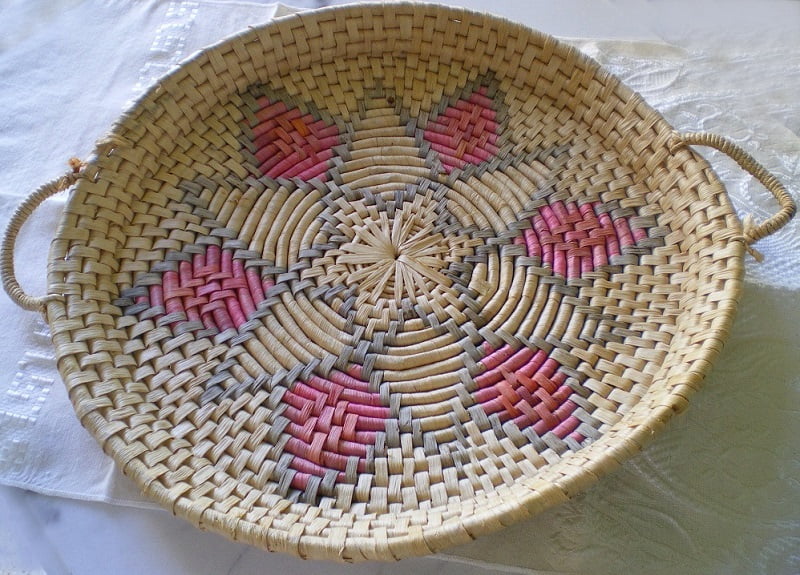
The drying time depended on the weather, the size of the pieces and the intensity of the sunshine.
Once thoroughly dried, the trahanas could be stored and used throughout the following months, sometimes until the next year's preparation.
How to Store Dried Trahanas
Traditionally, dried trahanas was stored in cloth bags in a cool, dry place.
From my own experience, however, I prefer to keep it in the refrigerator, especially when storing it for several months.
If dried trahanas is not stored properly, it can become infested with tiny insects or larvae, which we call appitouria in Cyprus.
I recommend storing completely dried trahanas in a clean, airtight container in the refrigerator.
Make sure it is thoroughly dry before sealing it, as trapped moisture can encourage spoilage.
If you notice insects, mould, unusual moisture or an unpleasant smell, discard it.
How Cypriot Trahanas Soup Is Traditionally Served
The simplest way to prepare trahanas soup is to boil the dried pieces in water until they soften and release their starch, creating a thick, creamy soup.
However, I find that cooking trahanas in chicken stock makes it much more flavourful.
Adding pieces of halloumi cheese gives the soup a wonderful combination of creamy texture, tangy flavour and slightly salty cheese.
Some regional variations also include fresh tomatoes.

In Cyprus, trahanas soup has traditionally been enjoyed as a warming winter meal.
In earlier times, people who rose before dawn to begin their work in the fields sometimes ate it for breakfast.
It is also a favourite comfort food, enjoyed as a light supper or after a long, tiring day.
Traditionally, many people considered it a soothing meal when recovering from illness or after a late night out.
For me, it is one of those simple dishes that always brings back memories of home.
What Is the Difference Between Cypriot and Greek Trahanas?
Although trahanas is prepared in many parts of Greece and Cyprus, the ingredients and methods vary considerably.
Cypriot trahanas is traditionally made with coarsely cracked wheat and sour sheep's or goat's milk. It is usually shaped into larger pieces before drying.
In many parts of mainland Greece, trahanas is made with flour, semolina or cracked wheat mixed with milk or fermented dairy products.
The mixture is generally dried and crumbled into small granules.
Two common varieties are xinos trahanas (sour trahanas) and glykos trahanas (sweet or mild trahanas).
In Crete and parts of the Aegean, a preparation called xinohondros is more similar to Cypriot trahanas because it uses coarsely cracked wheat and sour milk.
While Cypriot trahanas is primarily used for soup, Greek trahanas is also incorporated into pies, stews and other traditional dishes, where it helps absorb liquid and thicken fillings.
How to Make Cypriot Trahanas Soup (Trahanosoupa)
Making trahanas soup is very easy, especially when you already have dried Cypriot trahanas.
I usually measure the ingredients by eye, adjusting the amount of liquid according to how thick I want the soup.
For this recipe, I have provided measured quantities as a practical starting point, so you can prepare it at home.
One thing worth remembering is that trahanas continues to thicken as it cools. If you prefer a thinner soup, simply add a little more hot water or stock.
Frequently Asked Questions About Cypriot Trahanas
Do I need to soak dried Cypriot trahanas before cooking?
No. Although some people prefer to soak it first, I cook mine directly in water or stock. It simply needs enough time to soften completely.
Why does trahanas taste sour?
Its distinctive sour flavour comes from the fermented sheep's or goat's milk used during its preparation.
Can I make trahanas soup without halloumi?
Of course. Trahanas soup can be prepared simply with water or stock. However, halloumi adds a delicious salty flavour and makes the soup more creamy and satisfying.
Is Cypriot trahanas the same as Greek trahanas?
Not exactly. Both belong to a family of traditional grain-based foods, but Cypriot trahanas is usually made from cracked wheat and fermented milk and dried in larger pieces. Many Greek varieties are made with finer grains or flour and dried as small granules.
Can I freeze trahanas soup?
Yes. You can freeze freshly made trahanas but also dried once it has cooled. Allow the cooked soup to cool, transfer it into freezer-safe containers and freeze. When reheating, add extra liquid if necessary, as the soup will have thickened.

A Taste of Cypriot Tradition
Cypriot trahanas soup is one of those traditional recipes that have stood the test of time.
Made with just a few simple ingredients, it represents the resourcefulness of earlier generations, who found ways to preserve milk and wheat for the winter months.
From the women who gathered to prepare trahanas in large copper cauldrons to the families who enjoyed a steaming bowl of soup on cold mornings, this humble dish remains an important part of Cyprus's culinary heritage.
For me, it is also a reminder of childhood, family and the traditional flavours of home.
Whether you make it with water, chicken stock, halloumi or a little tomato, I hope you enjoy this comforting Cypriot soup as much as we do.
Historical Sources and Acknowledgements
The historical discussion in this article draws primarily on the research of food historian William Woys Weaver:
Weaver, William Woys (2002). “The Origins of Trachanás: Evidence from Cyprus and Ancient Texts.” Gastronomica: The Journal of Food and Culture, Vol. 2, No. 1, pp. 41–48.
DOI: https://doi.org/10.1525/gfc.2002.2.1.41
Weaver's research combines fieldwork in Cypriot villages with historical and linguistic evidence from ancient Greek, Egyptian, Roman and medieval sources.
Additional reference: Cyprus Food Museum, Trahanas – Gastronomical Map of Cyprus.
The childhood memories, personal cooking preferences, practical observations and recipe presented here are my own.

Greek trahanas
In many parts of Greece, trahanas is usually made with flour or durum wheat or bulgur wheat and milk.
Then they usually sieve it into tiny pellets and dried. In Crete and the islands of the Aegean, it is called "ksinohontros"and it is much similar to the Cypriot one.
In Greece there are two kinds of trahanas, sour and sweet trahanas and apart from making soups they also use it in pies, "pites" to absorb the fluids or in pies or stews, as a thickener.
I don't cook soup very often as the winters in Southern Greece, where we live, are quite mild and cook some , maybe three of four times during the whole winter.
On the rare occasions that it gets very cold and I want to make soup, there are so many different soups to chose from. I don't know which one to choose from as I like them all.
Here are some of my favourite soups:
Chicken Avgolemono soup is one of our favourite ones, but I also make Trahanas with chicken and vegetables, which is a twist to the traditional trahanas soup, giouvarlakia, Vegetable soup or kreatosoupa (meat soup with beef and vegetables) or psarosoupa same as kreatosoupa but using fish instead. One of my own concoctions is Fish velouté soup with trahanas, which is a must try recipe!
They are all so good but we hardly make each one, more than once a year.
The weather was very mild this year and until last week the temperatures were high, around 22 - 23 degrees C so this was another reason not to make soup.
The temperature has now dropped suddenly around 15 degrees and what better than a nice bowl of hot soup.

Cypriot Trahanas Soup
Trahanas (pronounced trah-hah-NAHS), is a traditional Greek and Cypriot product, made from cracked wheat flour and a goat milk curd that is fermented.
Ingredients
- 150 grams chicken breast
- 200 grams dried Cypriot trahanas
- 2 litres chicken stock, vegetable stock or water
- 55 grams passata
- 100 grams halloumi cheese, cut into small cubes
- Salt, if needed
- Freshly ground black pepper, to taste
- Croutons for serving (optional)
- Optional variation: Add a fresh peeled and chopped tomato for a different flavour
Instructions
- Put the chicken in a large pot with the water. Bring to a boil and skim off any foam. Add the salt, lower heat and cook for 20 minutes. Alternatively, if you do not
want to use chicken, you can skip this step and use chicken or vegetable stock. - Remove the chicken and add the passata or fresh tomato puree as well as the dried trahanas. Bring to a gentle boil over medium heat, stirring occasionally to prevent the trahanas from sticking to the bottom.
- Reduce the heat and simmer gently, stirring regularly, until the dried pieces soften and gradually break down.
- Continue cooking until the soup becomes creamy and the trahanas is completely tender. This may take approximately 30–40 minutes, depending on the size and dryness of the pieces.
- If the soup becomes too thick, add a little extra hot water or stock until you reach your preferred consistency.
- Add the cubed halloumi during the final few minutes of cooking and simmer until heated through and slightly softened. If you are using chicken, cut it into smaller
pieces and add it as well. - Taste before adding any salt, as both the stock and halloumi may already be salty.
- Season with freshly ground black pepper and serve immediately, while piping hot.
- If desired, serve with croutons on top.
Nutrition Information
Yield 6 Serving Size 1Amount Per Serving Calories 235Total Fat 13gSaturated Fat 3gTrans Fat 0gUnsaturated Fat 9gCholesterol 12mgSodium 369mgCarbohydrates 9gFiber 1gSugar 2gProtein 5g
Soups
If you like soups, check out these soups as well!
Pumpkin soup with carrots
Pumpkin and carrot


Mushroom Soup
This mushroom soup yields a hearty and flavourful vegan soup with a blend of vegetables and herbs, perfect for a comforting and delicious meal.

Magiritsa
Magiritsa is the Greek soup, made from lamb offal, lettuce and avgolemono sauce and the first meal served after the 40 days fasting of Lent.

Turkey Soup with leftover Turkey
This delicious Turkey soup, which is one of my favorites, is made with the carcass of our roasted turkey, which we make during Christmas.


Anginarosoupa: Artichoke & Celeriac Soup
Anginarosoupa, is a healthy and delicious Artichoke and Celeriac soup made from fresh artichokes, onions, garlic, celery and many other vegetable. The fish and Greek yoghurt are optional, so if you leave them out the dish is vegan.
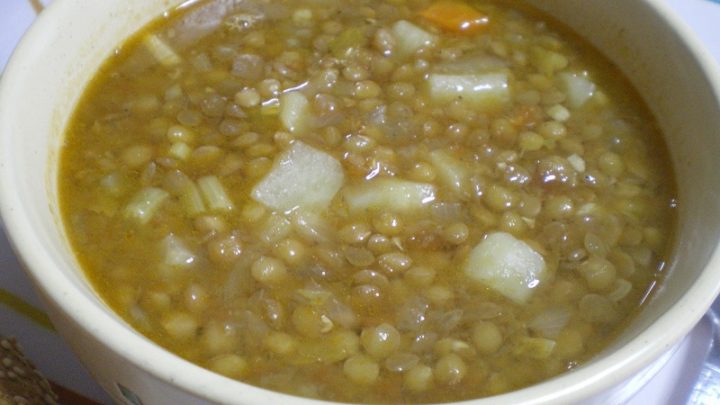
Fakes Soupa (Greek Lentil Soup)
Fakes (pronounced fakhés) is a Greek vegan lentil soup with vegetables.  It is of high nutritional value which makes it perfect for the cold days!
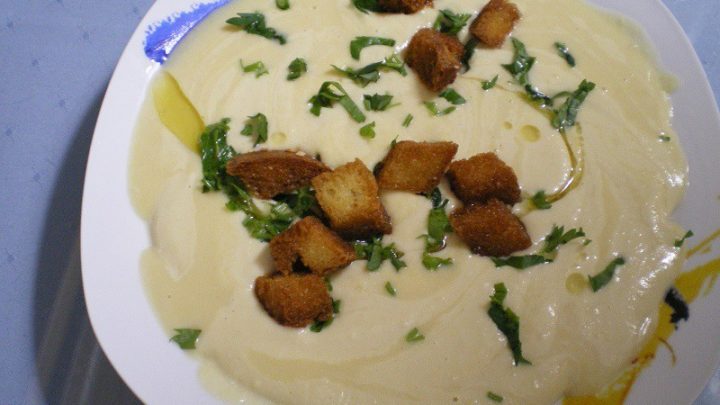
Hoummous Soup (Chickpeas soup)
Hoummous soup is made with the same ingredients as for hoummous dip. More hot broth is added until it reaches the consistency of a soup and is served with croutons. The cooked chickpeas can be freezed, so when making this soup, I usually boil more in order to make the dip whenever I like.

Big Bang Soup (Veloute Vegetable Soup)
The Bing Bang soup, as I call it, is a hearty veloute vegetable soup with star shaped pasta, which can be adapted with more vegetables.

Why is chicken soup good when you have a cold?
This recipe I made is not the classic Avgolemono Soup as I have enriched it with more vitamins and nutrients by adding some carrots, celery, a potato and an onion.

Cypriot Trahanas Soup
Trahanas (pronounced trah-hah-NAHS), is a traditional Greek and Cypriot product, made from cracked wheat flour and a goat milk curd that is fermented.


Greek Fava and Pumpkin Soup and Dip
This Greek Pumpkin and Fava Soup is made from scratch and is healthy, filling and perfect as a starter for a dinner party or a light supper.

Mirepoix Giouvarlakia Avgolemono Soup
A different recipe for Giouvarlakia avgolemono, which start with a mirepoix and then the meatballs are cooked with the vegetables and finish with the egg-lemon (avgolemono) sauce.


Kreatosoupa (Veal Soup with Vegetables)
Kreatosoupa is a Greek soup made with veal and lots of vegetables. I also call this soup clean up your fridge soup, as you can use any or all optional vegetables in the recipe.
Kopiaste and Kali Orexi,




Ivy, I don't eat traxana all that often but your soup is the most appetizing that I have seen. In the winters, it's one soup a week here...love them!
Interesting post and a great looking soup. Thanks for sending it along to Souper Sundays--nice to have you back this week!
Aloha,
Deb
That soup looks good! I have been wanting to try trahanas. I will have to look for it again.