
Pastitsio (Greek Pasta Casserole)
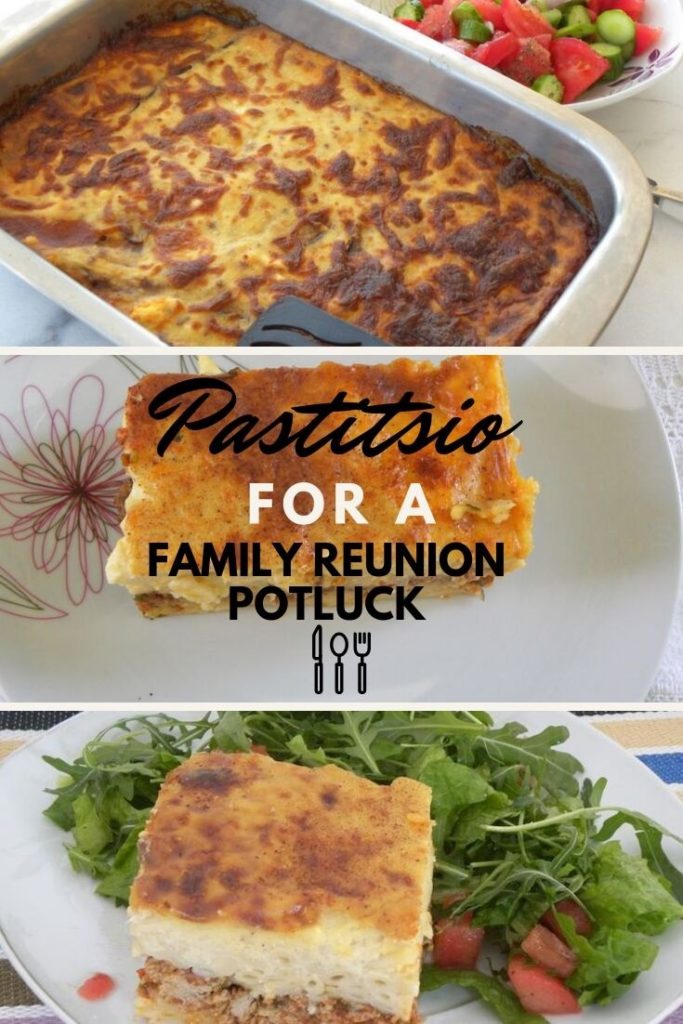
Pastitsio is a layered Greek pasta casserole dish, made with tubular pasta, meat sauce and topped with bechamel sauce.
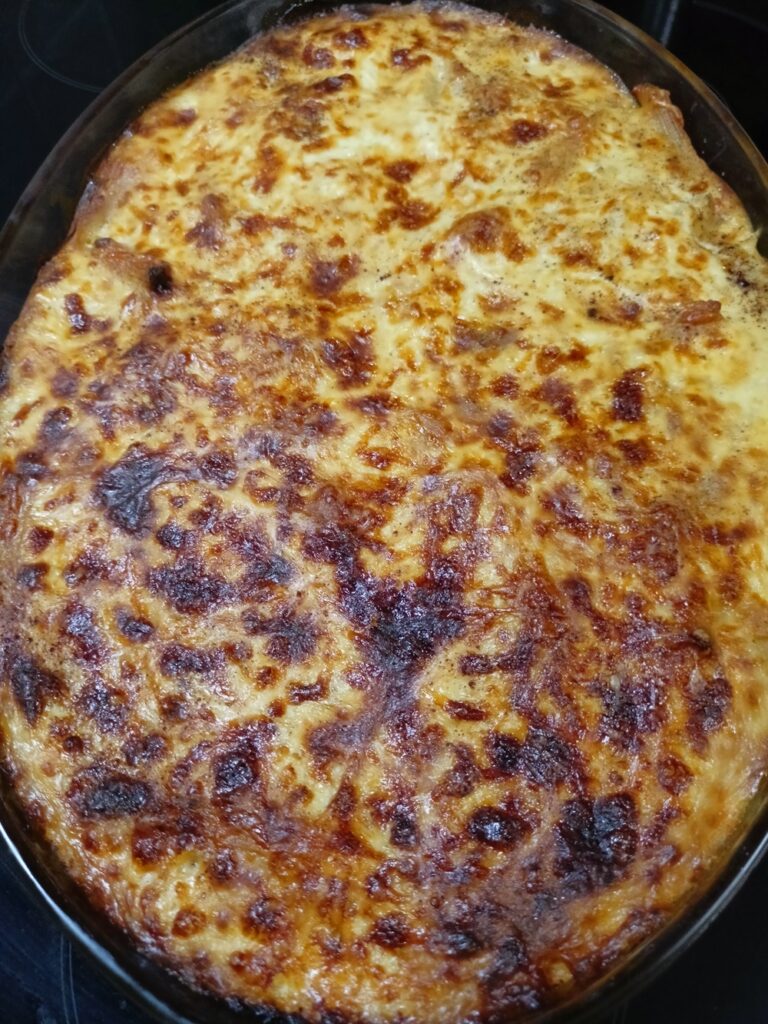
In many parts of Greece and Cyprus, Pastitsio is also called "Makaronia tou Fournou" which means "oven baked pasta".
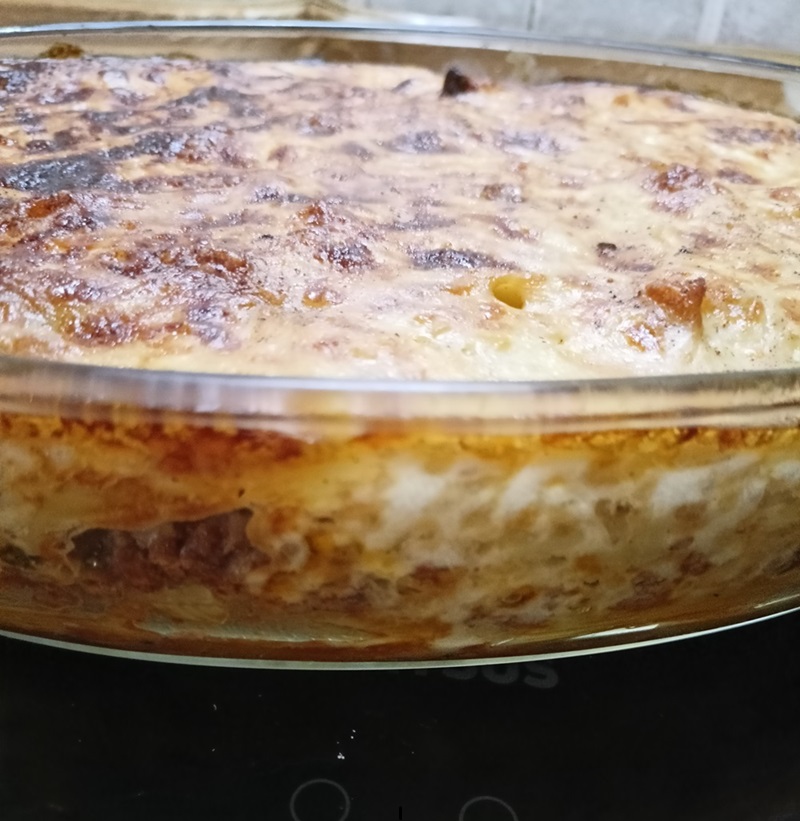
I have posted the Cypriot recipe for Makaronia tou Fournou, in another post, because it is slightly different than the Greek recipe.
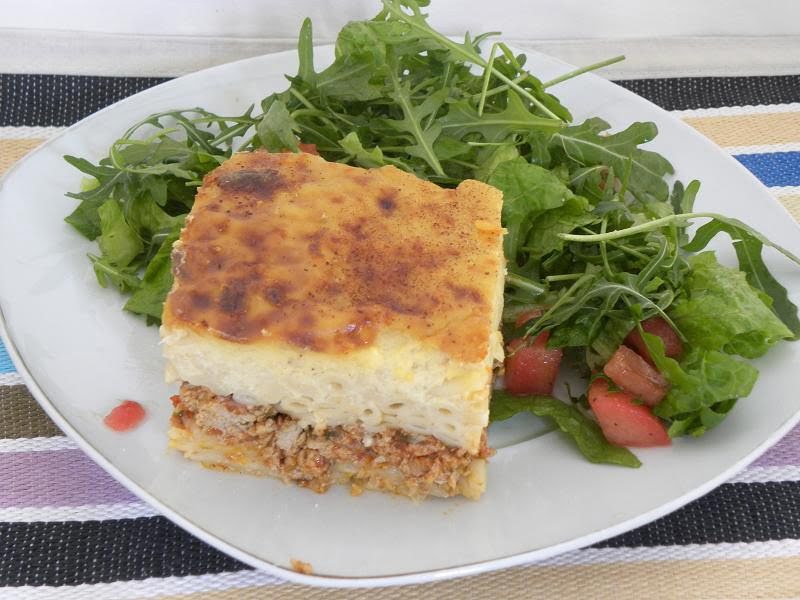
The name pastitsio comes from the Italian "pasticcio", where in some parts of Italy is also called "Lasagne al Forno", which again means "oven baked Lasagne".
Lasagna are made with a flat sheet of pasta which has its roots in ancient Greece.
This pasta was called "Laganon" or "Lasanon" or "Lasana". Lasanon was a trivet or a stand for the pot. The ancient Romans named it "lasanum".
They cooked this pasta in the "lasagnum" which later was named after this pot to Lasagna plural Lasagne. In Greece we still have an unleavened flatbread called "Lagana".
There are a few variations of Pastitsio throughout the regions of Greece with a few minor different spices but typically the bottom layer is bucatini or other tubular pasta with cheese and egg as a binder, or sometimes with some béchamel cream.
If we do not add the binder our pasta will not stick together but will spread in the plate during serving.
The second layer is a ground meat sauce (usually beef or veal in Greece, but it can also be substituted with pork, a mixture of veal and pork mince or chicken or turkey mince).
Grated fresh tomatoes (or canned during winter) are added to the sauce which is flavoured with cinnamon, nutmeg (cloves and allspice are a few other spices used, depending on the region) and parsley.
On top of the meat sauce another layer of pasta is added and on top of that a rich, creamy Béchamel sauce with grated myzithra, graviera, halloumi or other local cheese depending on the region.
Some of this cheeses is also mixed in the pasta as well as in the béchamel sauce and some is sprinkled on top together with a hint of nutmeg or other spices.
Prepare your pastitsio, at least an hour before serving, otherwise if you cut it immediately while it is still hot, the layers will fall apart. It needs some time to bind the pasta as well as the other layers.
When reheated, it does not fall apart but it is also good eaten the next day, t room temperature.
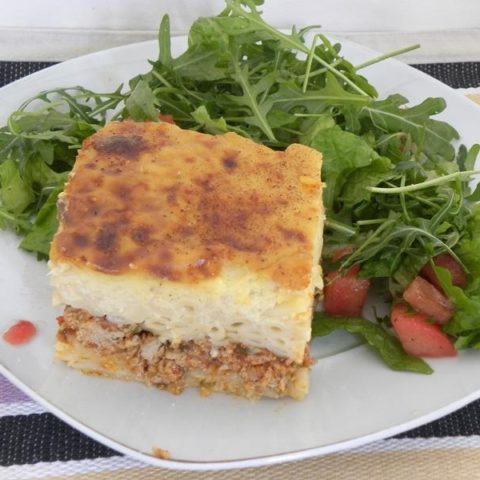
Pastitsio (Greek Pasta Casserole)
Pastitsio is a Greek baked pasta dish with meat sauce between two layers of tubular pasta and topped with bechamel sauce.
Ingredients
- 1 packet (500 grams) of Greek tubular pasta No. 2 or No. 3 (bucatini)
- 1 tablespoon salt
- 2 tablespoon olive oil
- A pinch of ground cinnamon
- 1 cup grated graviera, halloumi, kefalotyri or dried myzithra cheese, divided (you can also use pecorino or parmesan)
For the meat sauce:
- 500 grams ground beef or veal
- ¼ cup olive oil
- 1 red onion finely chopped
- 1 clove of garlic, finely chopped (optional)
- ½ cup of white dry wine
- 3 ripe tomatoes peeled and blended (or 500 grams passata)
- 1 tablespoon sea salt
- Freshly ground black pepper
- ¼ teaspoon powdered cinnamon (or 1 small cinnamon stick)
- ¼ teaspoon ground allspice (or 3 -4 berries)
- 1 bay leaf
- 1 cup parsley, finely chopped
Béchamel sauce:
- 1 litre milk (warmed up)
- 50 grams extra virgin olive oil (or butter)
- 50 grams all-purpose flour
- 3 eggs (reserve the 2 egg whites)
- ½ teaspoon (or more) salt, (depending on the saltiness of cheese added)
- ½ teaspoon ground nutmeg or cinnamon
Instructions
The meat sauce:
- Heat the olive oil in a sautéing pan and sauté the onion until
translucent. Add the garlic and mix for a few seconds - Add the ground meat and sauté, stirring, until no longer pink. Deglaze with the wine and mix for 3 - 4 minutes until the alcohol evaporates.
While mixing, add salt, pepper, cinnamon, allspice, bay leaf and tomatoes and cook over moderate heat for about 15 minutes or until the sauce reduces. - Remove from the heat and discard the cinnamon, bay leaf and allspice berries, if used whole
- Mix in parsley and set aside. When the béchamel is ready add a couple of tablespoons in the meat sauce and mix.
Cook the pasta:
- Meantime, in a big pot, bring water to a boil, add salt and cook the pasta al dente, according to the package instructions
- Remove from the heat and cool the pasta under running water
- Drain, and wet the pasta with the olive oil When ready to use, beat the egg whites and add it to the pasta, together with about ¼ cup of the cheese and mix. You can also add a couple tablespoon of bechamel.
Prepare the béchamel:
- Before starting, heat the milk and beat the eggs.
- In a saucepan heat the olive oil and add the flour, salt and nutmeg and mix thoroughly using a whisk, until it starts to slightly brown and release its aroma.
- Remove from the heat and add the warm milk, stirring constantly.
- Add the whisked eggs gradually and put it back on the heat
- Continue, mixing until the sauce becomes thick and creamy.
- Add half cup of the cheese and mix.
Assembling the dish:
- Layer half of the pasta in a 35 x 30 cm / 14 x 12 inches baking tin.
- Pour the ground meat on top and spread it to cover the pasta.
- Add the remaining pasta on top and add the béchamel sauce to cover the pasta.
- Sprinkle with the remaining cheese and sprinkle some cinnamon or nutmeg on top.
- Bake in a preheated oven to 180o C / 350o F (or 160o C / 325oF for air forced ovens), for about 45 - 50 minutes or until golden on top
- Let it cool before cutting into portions
Nutrition Information
Yield 8 Serving Size 1Amount Per Serving Calories 581Total Fat 38gSaturated Fat 12gTrans Fat 1gUnsaturated Fat 23gCholesterol 163mgSodium 2022mgCarbohydrates 21gFiber 2gSugar 9gProtein 33g
"These values are automatically calculated and offered for guidance only. Their accuracy is not guaranteed."
Other relevant recipes:
Rome snapshots and Pastitsio ala Italika
Deconstructed Pastitsio with Paprika
Kopiaste and Kali Orexi!

This looks delicious Ivy!! I really enjoy this type of food and I'm sure my family would love this 🙂
Rosie x
It has been a while since I tried to make Pastitsio. I tried a delicious version in Ioannina but would be willing to come to your home and learn to make it your way...wink..wink...
Val, have you made the version you tried at Ioannina? I am curious to see what's different.
Ivy this is definitely my kind of food. Your Pastitsio looks so good!!
Maria
x
Delicious! I'll have to make this for dinner! 🙂
It does look awesome and thanks for the tips as well. So glad you shared with Presto Pasta Nights.
This looks like a sunday meal to me!!! Everybody sitting at the table, even the cook, and enjoying a meal together :D. It must be so fulfilling! All I would need after a Pastitsio like yours would be a siesta 😀
Yum Ivy - I love lasagna, so I am sure that this would be delicious.
This looks great- I will try this myself. Reminiscent of mousaka (sp?) but without the eggplant I have to be in the right mood for.
Hi Lauren, thanks for passing by. The bechamel and the ground meat are similar to moussaka but the end result is totally different.
That pastitsio looks really tasty!
Thank you Kevin and good luck for your turn to host.
My aunt and my father still speak of the pasticcio that their Greek cook used to make. It apparently had a phyllo crust which she made herself. I love your recipe but was wondering if you ever made it with phyllo dough on top?
Joumana, I know which one you are referring to. I think this is a speciality of one of our islands, I think Corfu. Unfortunately I have not made it yet.